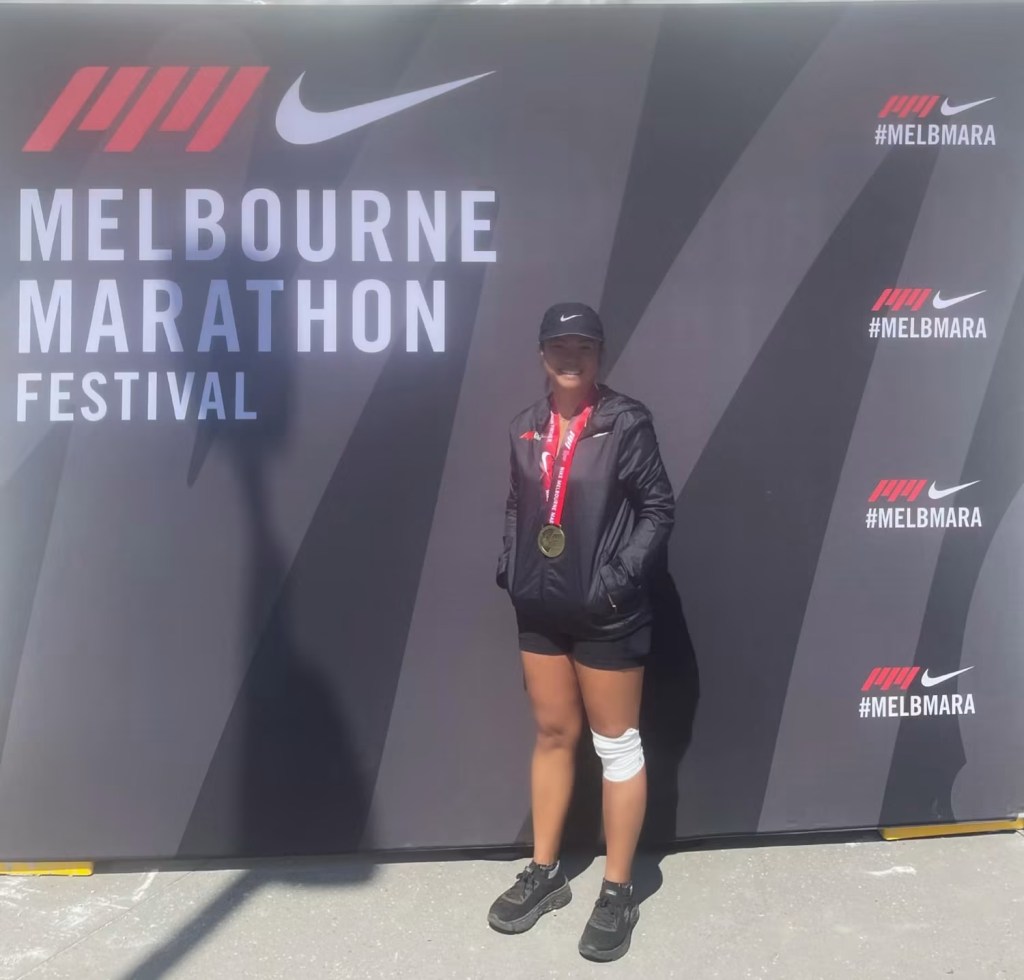
Originally written October 2, 2022
I woke up that morning still doubting myself, but once the marathon started, I actually felt strong.
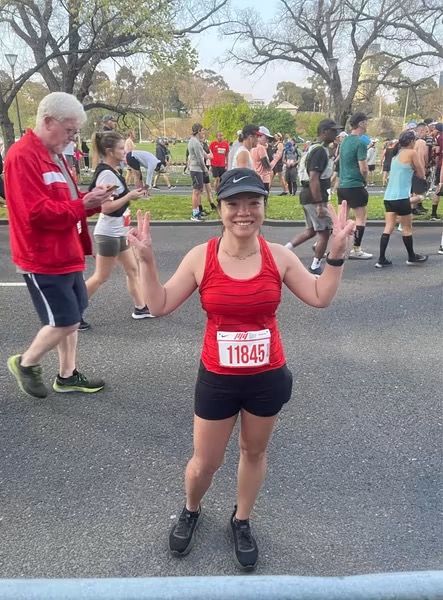
For the first 16 kilometres, I was ahead of the five-hour pacer.
Then nature called. 
Unfortunately, apparently nature had called several other runners at exactly the same time because the toilet queue was long.
By the time I came out, the five-hour pacer had just run past me.
I was aiming for a five-hour finish, so instead of simply settling back into my race, I increased my speed to catch up.
Bad idea.
Somewhere along the way, I pulled something around my left groin. Muscle, ligament — I didn’t know. All I knew was that running had suddenly become very difficult.
So I walked.
Painfully.
Then, at around the 40-kilometre mark, my left knee decided it had also had enough and gave way.
At that point, even walking became difficult.
I found one of the paramedics stationed along the course and asked if he could strap my knee. He told me he wasn’t trained in physiotherapy strapping.
I begged him anyway.
I wasn’t asking for perfection. I just needed the knee held together long enough for me to limp another couple of kilometres. 
Somehow, it worked.
And I limped my way to the finish line.
Twenty-seven minutes before the cutoff.
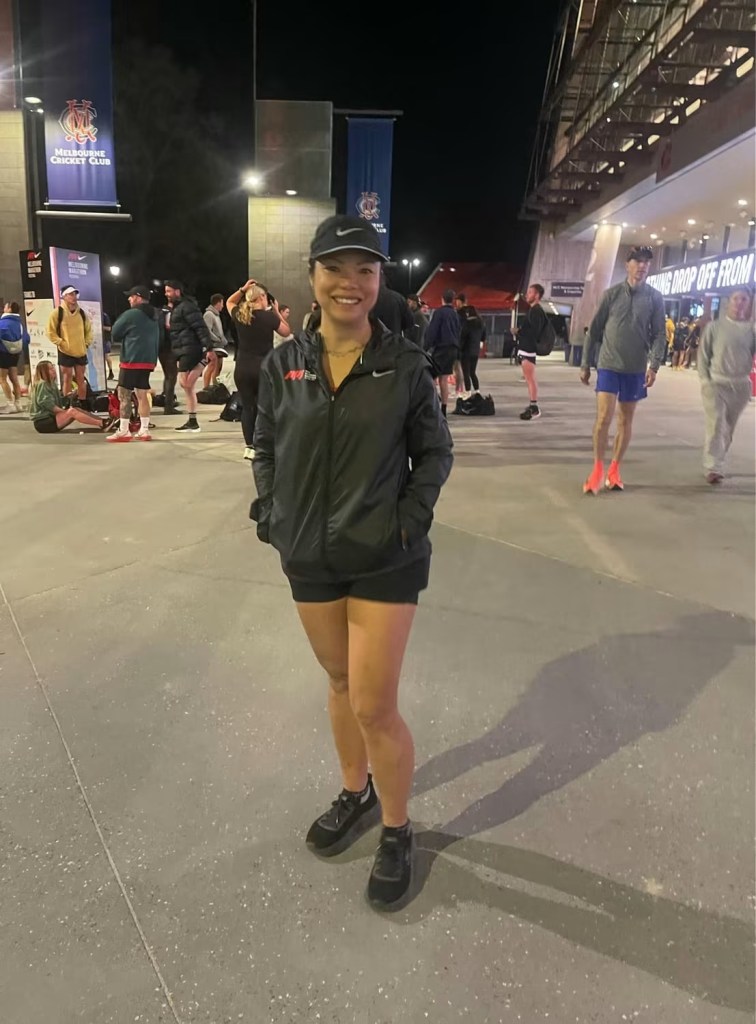
It certainly wasn’t the five-hour marathon I had planned.
But I finished.
And perhaps the bigger achievement was learning a lesson I would remember in later races: sometimes the quickest way to ruin your race is to start chasing the time you think you’ve lost.

