Originally written in 2020
Before this weekend’s camping trip, I had already hiked Mt Bartle Frere three times.
Twice, I attempted it from the eastern approach and failed to reach the summit. Once, I successfully reached the summit from the western approach.
This weekend, I finally completed what had slowly become a bit of an obsession.
And somewhere between crawling over boulders, clinging to cracks in rocks and leaving whatever dignity I had at home, I learned a few things. 
Lesson 1: We don’t always value what comes easily.
Yes, I had already reached the summit from the western approach.
But strangely, it never felt quite the same to me because I found that route relatively easy.
Maybe that’s human nature. Sometimes we place more value on the things that demand something from us.
The eastern approach demanded plenty.
Lesson 2: Sometimes the hardest part is very close to the finish.
A lot of people attempt Bartle Frere from the eastern side, but not everyone reaches the summit.
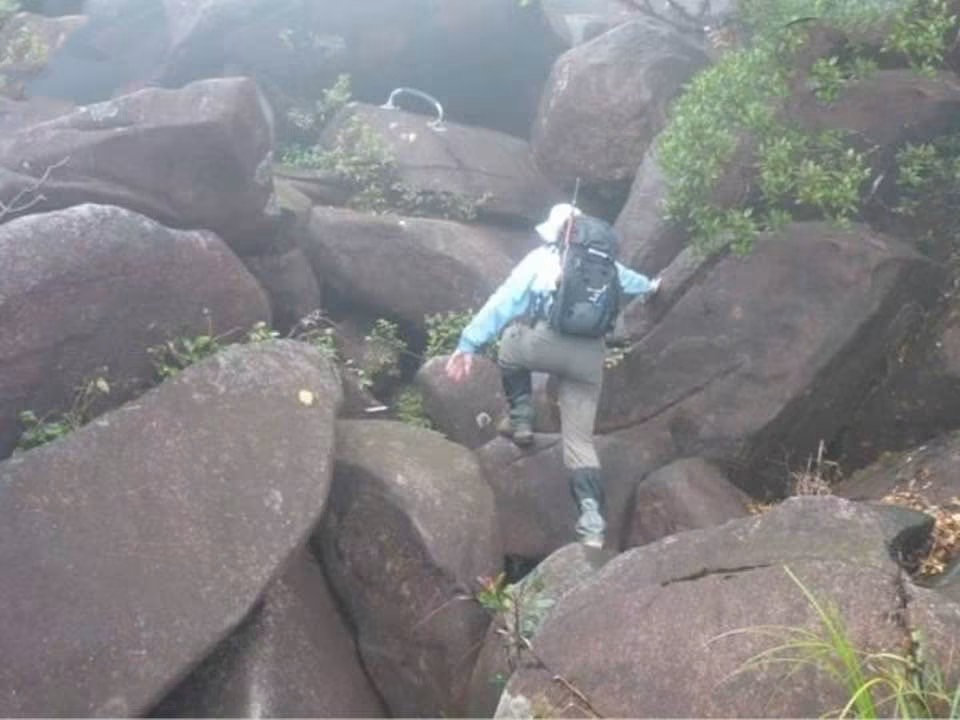
By the time you get to the boulder section, you’ve already climbed roughly eight kilometres and gained a serious amount of elevation. Then, with only about 600 metres to go, the mountain suddenly looks much more intimidating.
Some people see the huge boulders and decide they’ve had enough. Some are frightened by the gaps and drops between them. Some are exhausted. Some are cold.
I’ve heard all of those reasons from hiking companions before, and on previous attempts we turned back.
I wasn’t going to leave someone alone in the cold while I continued, and I certainly didn’t want to be halfway through the boulders with someone having a panic attack.
But every failed attempt made me more curious.
What exactly was between the helipad campsite and the summit?
Was it really that difficult?
And if other people could do it, could I?
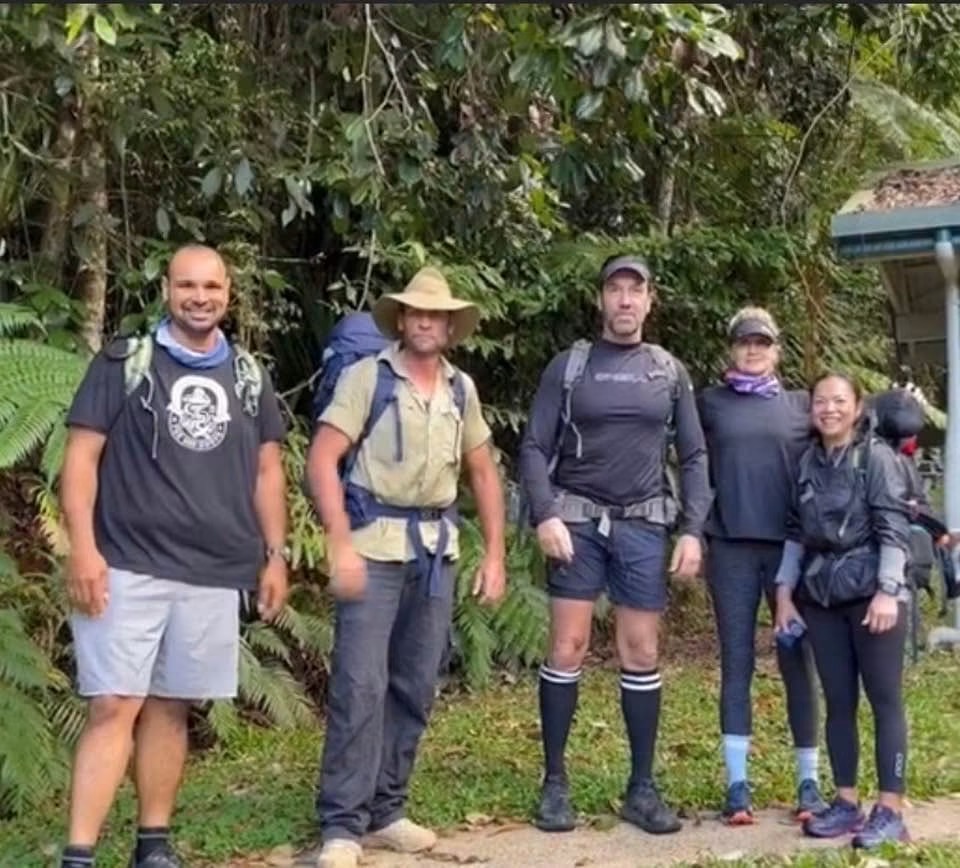
So last Saturday, five of us from Andy Hikes Adventure set out to camp on Bartle Frere — and, obviously, reach the summit.
Lesson 3: You don’t have to tackle everything head-on.
I’m short.
Short legs. Short arms.
I cannot simply leap gracefully from one giant boulder to another like some people can.
So I had to find another way.
I looked for cracks to hold onto. I used smaller rocks between the big ones as stepping stones. I crawled. I slid on my bottom. I twisted and contorted my body into whatever shape was required.
At one point, a guy in our group suggested what he thought was the best route.
I told him:
“Your best route doesn’t mean it’s the best route for me.”
As a short person, I’ve learned not to tackle big things head-on.
Sometimes I go around them.
It might take longer. It might be unconventional. It might look completely ridiculous.
But as long as it gets the job done, who cares?
Lesson 4: Sometimes you need to leave your dignity at home.
Bartle Frere requires fitness, courage, strategy and presence of mind.
Apparently, dignity is optional.
There is absolutely nothing dignified about crawling across rocks, clinging desperately to whatever you can reach and sliding down a boulder on your bottom.
But dignity wasn’t going to get me to the summit.
My bottom did. 
Lesson 5: Not every summit has a spectacular view.
After all that effort, you might imagine we arrived at the summit to a magnificent panorama.
Nope.
The vegetation around the summit is quite overgrown, so reaching it was surprisingly anti-climactic.
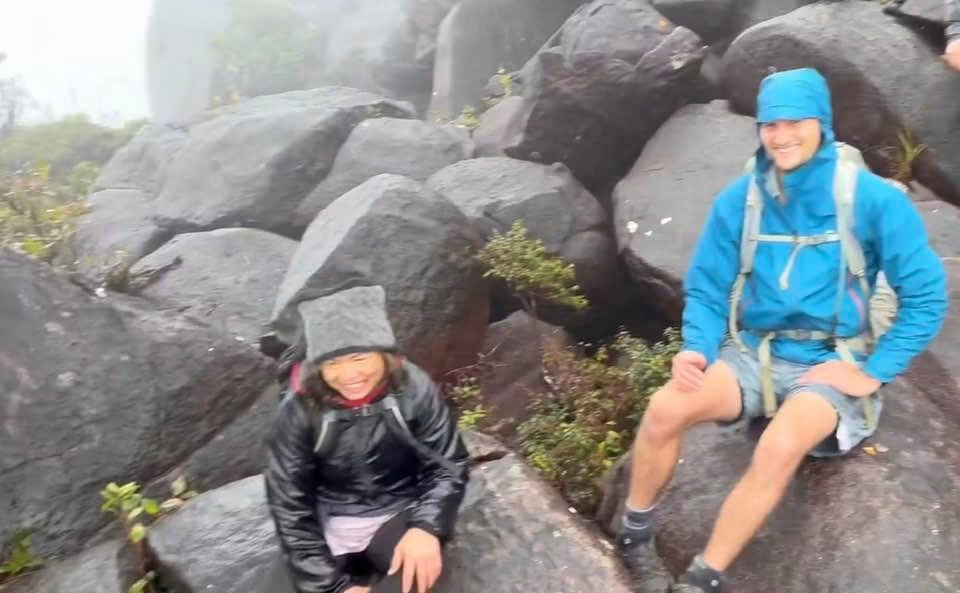
And because it rained for most of the trip, we also missed the sunset and sunrise that are supposedly beautiful from the campsite.
But perhaps that was another lesson.
If you spend the whole journey waiting for the grand view at the end, you might miss everything that happened along the way.
The people you met.
The hands that helped you.
The ridiculous positions you had to put your body into.
The conversations.
The rain.
The fear.
The laughter.
And the satisfaction of discovering that something you once thought might be beyond you was simply something you needed to approach differently.
Sometimes the summit is just a sign among the trees.
The story is everything that happened before you got there.

